“Triplets against eighth notes” is one of the most famous examples of polyrhythm. It is also called cross-rhythm, and it appears in different genres of music. To mention one of them, here is an excerpt from Debussy’s Arabesque No 1.
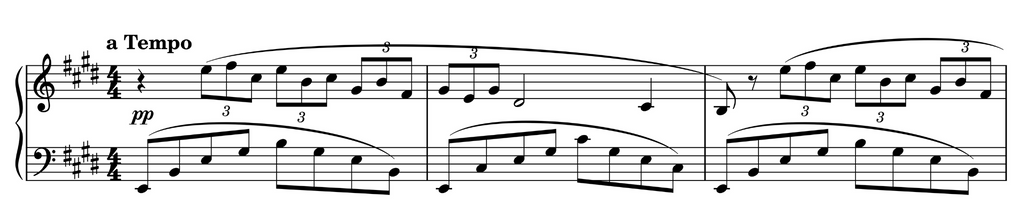
It gives the impression of dancing, and the music becomes vibrant. At first sight, it seems elusive, almost arbitrary. It takes a bit of analysis and practice to master this rhythmic figure. To make it part of your skill set, all you need to do is follow these 3 Easy Steps.
Step #1
Understanding
The first step is understanding how to put 3 notes of equal length and 2 notes of equal length in the same time unit.
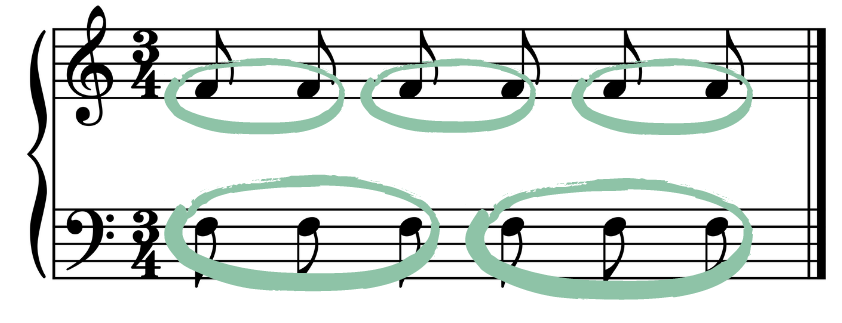
Let’s start with the common multiple of 3 and 2 on a piece of staff paper. Fill a 3/4 measure with 6 eighth notes as shown in the example below:
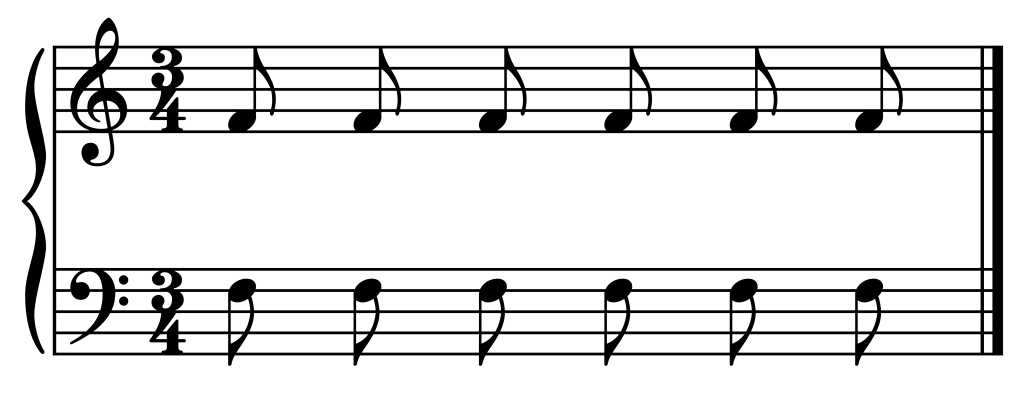
Create equal groups in both hands. 3 groups in the right hand, and 2 groups in the left hand.
Transform the circles into beams:
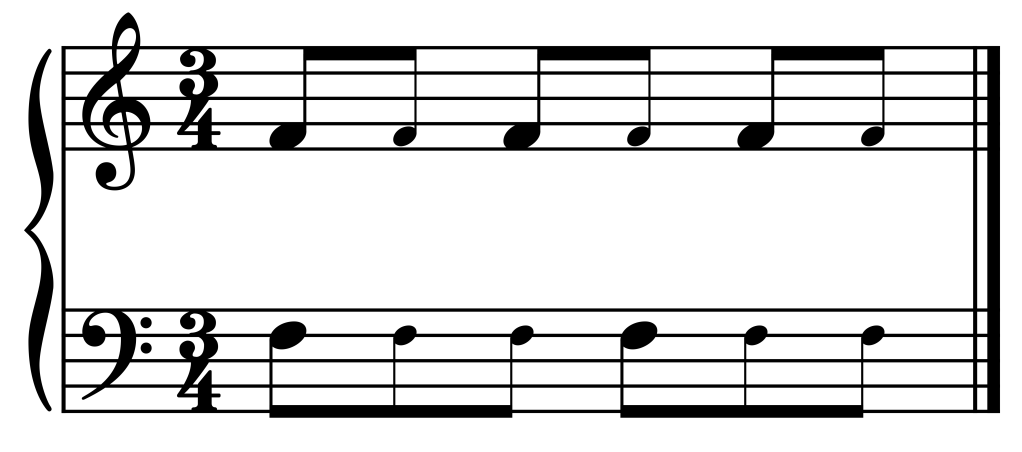
Let’s see what happens when we decide to play only the first notes of these groups.
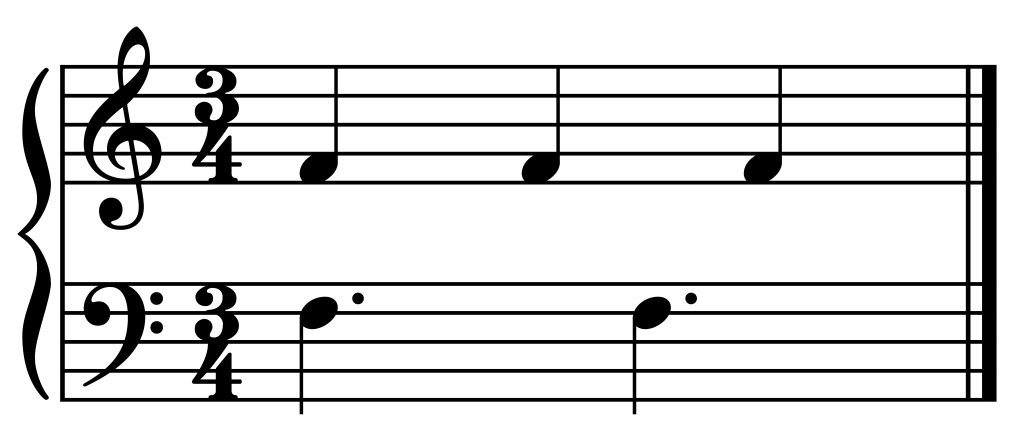
Observing the example above, you might notice two things.
- The two hands start together
- The order of the hands for the last three notes is Right, Left, Right
There are three notes against two in a measure. What if we convert it to a beat? Three notes against two on each beat, and here they are, triplets against eighth notes:
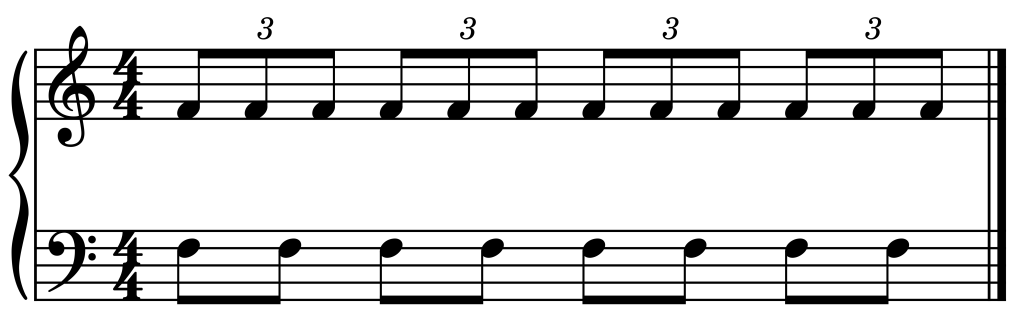
Conclusion: the second note in the left hand comes between the second and third notes in the right hand.
Step #2
Feel the Rhythm
Understanding is a good starting point. Now you are ready to go further and put your knowledge into action. The second step is to feel the rhythm. For that, we do a simple exercise: tap the rhythm on the piano lid.
As you can see in the example below, the right hand is tapping triplets, and the left is tapping eighth notes. With all that, count the triplets out loud.
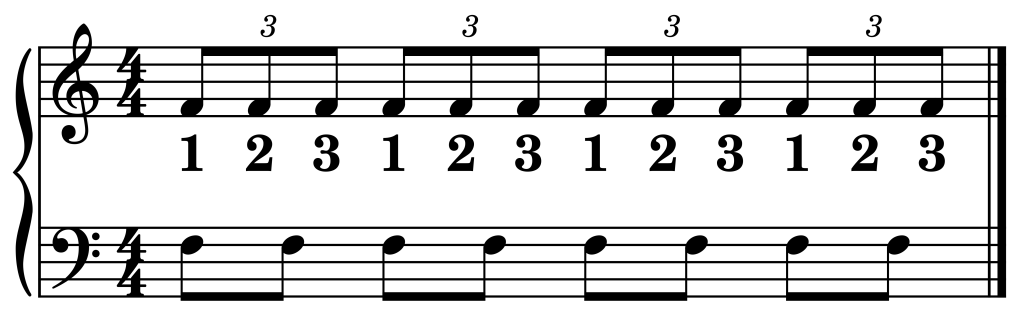
Practice this exercise until it becomes easy. What does it mean? It means that the rhythm plays itself. It means you keep track of your triplets and tap your rhythm correctly while looking around the room, out of the window, and watching the people on the street.
At this point, start counting the eighth notes. Reach the same ease that you already have with counting the triplets.
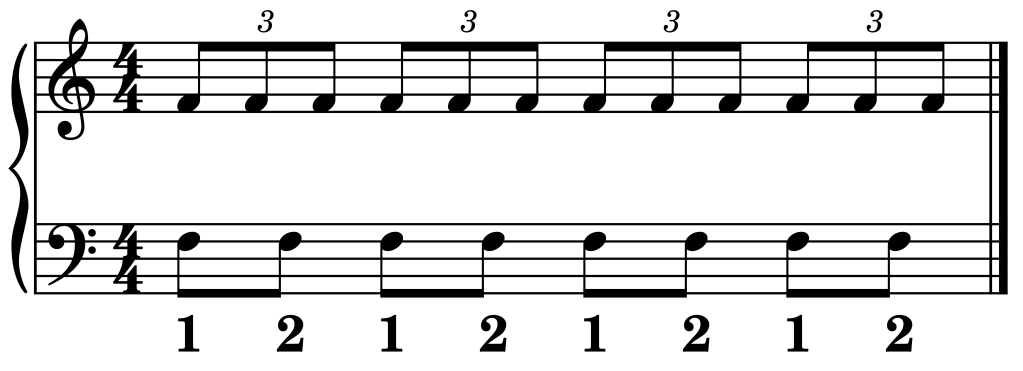
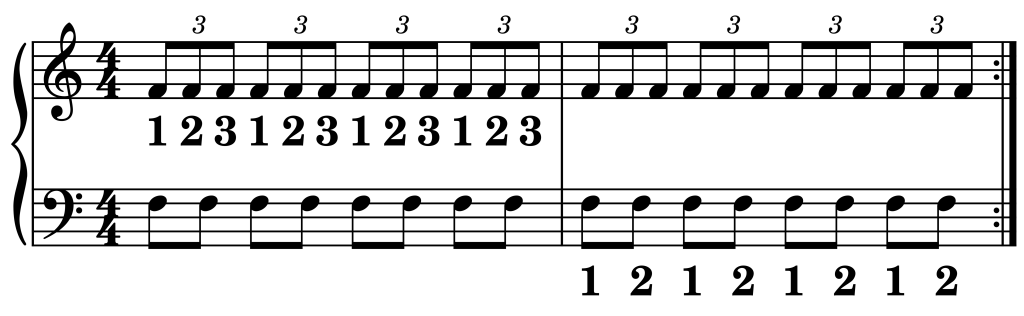
Combining the two is the next level when you switch between counting triplets and counting eighth notes by measure. The change has to be seamless. Attention: a barline does not mean extra time to think. To make sure that you are precise, use the metronome.
By now, your movements are automatic when the triplets are in the right hand. Let’s see what happens when we put them in the left hand.
Just like in the case of the previous exercises, spend enough time on this one too. Practice until it becomes easy. Think about the goal: while playing different notes and nuances in a piece of music, there is no time for hesitation about the rhythm; we want to feel the rhythm.
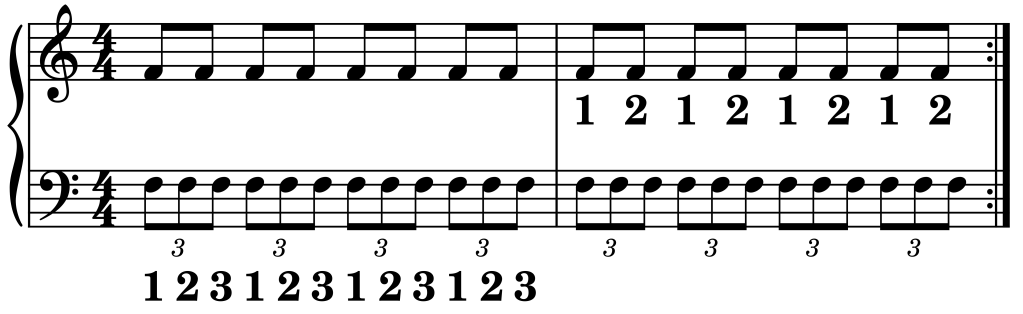
In summary: there are four elements in this exercise.
- Tapping triplets
- Tapping eighth notes
- Counting three
- Counting two
I invite you to create your exercises. Mix up these elements, and switch between the hands and the counting. You can even use different tools to tap the rhythm. Sparkle your creativity!
Step #3
Play Music
The movement of the cross-rhythm is in your hands by now. You understand it, and you feel it. We reached the final step of this practice, it is time to play some beautiful music!
Choose a short piece of music where you play triplets against eighth notes. Start with a few measures, and practice them slowly focusing on the rhythm.
As a final touch, here is a little bonus for you. Each exercise above is available in this video:
Happy practice!
 Source of Music